Related searches
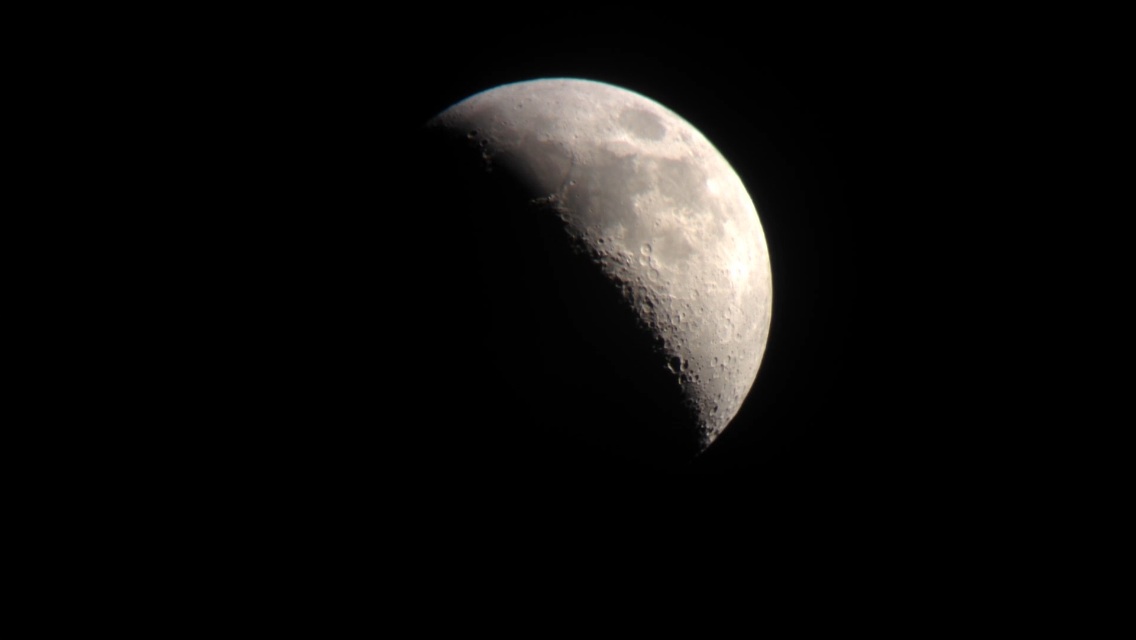
I used to have the same problem as you did but I have a planetary cam and I have a 5 inch telescope. Get a phone adapter for your telescope, Which I think you already have but just in case you don’t get one. Get 2 minutes of footage if you can, and try to use the drizzle for autostakkert. And then just sharpen and denoise the image on registax.
- » imperium for mac mac mac mac
- » registax 日本語
- » registax letöltése
- » registax magyar
- » registax preço
- » registax что это
- » free shareware registax deutsch
- » registax install
- » registax italiano download
- » registax ダウンロード
- Sofortbild - Free capture control for mac + nikon. DSLR Shutter - Free sequence capture control for Mac/PC + lots of DSLRs. You need a shutter control interface, like this one in order to use this with a nikon however. Nebulosity 3 - $80 capture and processing software for Mac/PC. Supports a bunch of Canon DSLRs and astro cams.
- ICap is authored by The Imaging Source and has been specifically designed for use with astronomy cameras. It is included with all purchases. Use the application to i) set all camera parameters, ii) see the live image data stream from the camera, iii) snap singular images from the camera and save them as BMP or JPG files, iv) capture image sequences and save the single images as enumerated BMP.
- RegiStax for NexImage is a Shareware software in the category Miscellaneous developed by Celestron. The latest version of RegiStax for NexImage is currently unknown. It was initially added to our database on. RegiStax for NexImage runs on the following operating systems: Mac. RegiStax for NexImage has not been rated by our users yet.
- List of the best astrophotography software to use in 2021. Create unique and high-quality modern deep sky images. The best astronomical image processing software for Mac and Windows.
registax for mac
at UpdateStar- More
RegiStax for NexImage
- More
Apple Software Update 2.6.3.1
Apple Software Update is a software tool by Apple that installs the latest version of Apple software. It was originally introduced to Mac users in Mac OS 9. A Windows version has been available since the introduction of iTunes 7. more info... - More
Dropbox 123.4.4832
Dropbox is software that syncs your files online and across your computers. Put your files into your Dropbox on one computer, and they'll be instantly available on any of your other computers that you've installed Dropbox on … more info... - More
VLC media player 3.0.14
VLC Media Player Foot Pedal allows VLC Media Player to be used as transcription software for transcription of all types of media files with full foot pedal support. more info... - More
QuickTime 7.79.80.95
QuickTime is Apple's cutting-edge digital media software for both Mac and Windows-based computers delivers unparalleled quality for creating, playing and streaming audio and video content over the Internet. more info... - More
iTunes 12.11.3.17
An audio player for playing and organizing digital music files. Buy music, movies, TV shows, and audiobooks, or download free podcasts from the iTunes Store 24 hours a day, 7 days a week. more info... - More
Mozilla Firefox 89.0
Coupon Search Plugin for Firefox, find some of the best discounts and deals around from the best retailers on the net. Coupons, discount codes and more. CouponMeUp have thousands of the best coupons from hundreds of online retailers. more info... - More
Remo Recover 5.0.0.34
Remo Recover Photo (MAC) is powerful and easy to use recovery software to recover and restore lost digital photo, audio and video files when you delete them accidentally, or after formatted your memory card. more info... - More
Java SE Runtime Environment 8.0.141
Java allows you to play online games, chat with people around the world, calculate your mortgage interest, and view images in 3D. more info... - More
Safari Browser 5.1.7
Safari is a popular web browser developed by Apple originally for Mac OS X and later ported to Windows. Safari has several advanced features:Easy Bookmarks: Organize your bookmarks just like you organize music in iTunes. more info...
registax for mac
- More
Apple Software Update 2.6.3.1
Apple Software Update is a software tool by Apple that installs the latest version of Apple software. It was originally introduced to Mac users in Mac OS 9. A Windows version has been available since the introduction of iTunes 7. more info... - More
Mozilla Firefox 89.0
Coupon Search Plugin for Firefox, find some of the best discounts and deals around from the best retailers on the net. Coupons, discount codes and more. CouponMeUp have thousands of the best coupons from hundreds of online retailers. more info... - More
Skype 8.72.0.94
Skype is software for calling other people on their computers or phones. Download Skype and start calling for free all over the world. The calls have excellent sound quality and are highly secure with end-to-end encryption. more info... - More
Dropbox 123.4.4832
Dropbox is software that syncs your files online and across your computers. Put your files into your Dropbox on one computer, and they'll be instantly available on any of your other computers that you've installed Dropbox on … more info... - More
WinRAR 6.01
WinRAR is a 32-bit/64-bit Windows version of RAR Archiver, the powerful archiver and archive manager. WinRARs main features are very strong general and multimedia compression, solid compression, archive protection from damage, processing … more info... - More
iCloud 7.21.0.23
iCloud is cloud service done right. It stores your music, photos, apps, calendars, documents, and more. And wirelessly pushes them to all your devices.The iCloud Control Panel makes it easy to keep your contacts, calendars, and bookmarks … more info... - More
QuickTime 7.79.80.95
QuickTime is Apple's cutting-edge digital media software for both Mac and Windows-based computers delivers unparalleled quality for creating, playing and streaming audio and video content over the Internet. more info... - More
Kaspersky Password Manager 9.0.2.1186
Stores your passwords... securelyKaspersky Password Manager stores all of your passwords - and key information about your identity - in an encrypted vault. more info... - More
Audacity 3.0.2.0
A fast multi-track audio editor and recorder for Linux, BSD, Mac OS, and Windows. Supports WAV, AIFF, Ogg, and MP3 formats. Features include envelope editing, mixing, built-in effects and plug-ins, all with unlimited undo. more info... - More
Windows Live Sync 14.0.8117.416
Windows Live Sync (formerly known as Windows Live FolderShare) is a free-to-use file synchronization application by Microsoft that is designed to allow files and folders between two or more computers be in sync with each other on Windows … more info...
- More
Up Endnote X Mac 19.3.3.13966
- More
HP MAC Address Manager
- More
Mac Blu-ray Player 2.17.2
Macgo Mac Blu-ray Player is a superior Blu-ray player that can bring you the most unforgettable Blu-ray experience on your Mac.OverviewMacgo Mac Blu-ray Player can satisfy just about every need you could possibly have in a Blu-ray Player. more info... - More
Adobe Illustrator CS3 (Mac) 13
Adobe Illustrator CS3 is a worthwhile upgrade for Illustrator, Flash, and even FreeHand users. Illustrator CS4 is still the best at what it does, but this year it lacks the in. more info... - More
Macromedia Dreamweaver Win/Mac 8.0.2
Most recent searches
- » 3d lara and horses
- » baixar logic usb display driver
- » jepp update manager
- » facebook lite para microsoft descargar
- » descargar windows loaarde
- » télécharger laubncherubisoft
- » descargs driver alfa
- » hentaigirl fantasy
- » ứng dụng luxand facesdk
- » download java se 8.0.2910.10
- » japanese mom tobe
- » sqlyog 32bit free dld
- » xvideo downdoad
- » imagelab mac下载
- » appelication dowlo.com
- » cbt myschool
- » craving explorer 1.9.22
- » t online broweser
- » brea bennett电影观看
- » anydesk 6.3 官網下載
Deep Sky Stacker Tutorial
I have been using DeepSkyStacker to get the most out of my astrophotography images since I began shooting through a telescope in 2011. This useful and easy-to-use freeware tool simplifies the pre-processing steps of creating a beautiful deep sky image.
The concept of stacking in astrophotography is simple, by combining multiple images together, the signal-to-noise ratio can improve.
With so much time and effort going into the acquisition stages of astrophotography, it would be a shame not to achieve the best possible results when stacking your images. In this post, I will explain the DeepSkyStacker settings I use to stack and register all of my astrophotography images.
If you haven’t already done so, download DeepSkyStacker for free. The version I currently use to stack and register my astrophotography images is DeepSkyStacker 4.2.3.
I have used DeepSkyStacker to align, calibrate and integrate every deep-sky astrophotography image I have ever taken. It is well worth your time to learn how to use this free software successfully, as you will enjoy it for years to come.
Over the past 8 years, I’ve stacked images created using a DSLR camera, dedicated astronomy camera, and CCD Camera. Whether you are stacking .RAW image files from my Canon DSLR, or .FIT files from a CCD camera (or dedicated CMOS), the right settings can be the difference between a good image, and a great one.
Integration is the key to great astrophotography image. This is the reason why amateur astrophotographers spend multiple nights collecting pictures on a single deep sky target. Calibration is another vitally important component of the process, as this removes unwanted elements from your image that would otherwise spoil the picture.
For an in-depth, step-by-step guide to DeepSkyStacker and Adobe Photoshop, please consider downloading my premium image processing guide.
Page 35 of my premium image processing guide.
Main Features
For many amateur astrophotographers, DeepSkyStacker (DSS) is an integral part of their image processing workflow. For myself, I find that DeepSkyStacker does an exceptional job of registering astrophotography images taken using a variety of methods. This includes everything from untracked DSLR and camera lens shots to deep sky astrophotography through a telescope.
DSS can register images of everything from a wide-angle Milky Way panorama to a deep sky emission nebula. Most of my experience with this software has been on a Windows 10 PC, stacking Canon RAW files from a DSLR. To run Deep Sky Stacker on a Mac computer, a workaround such as using a virtual machine is necessary.
Let’s take a look at the main features of this software:
- Registration of picture sets
- Creation and use of offsets, flats, and dark frames
- Native use of RAW files from most DSLR
- Multiple Stacking methods including average, median, kappa-sigma clipping and more
- Preview of all pictures including RAW and FIT file types
- Simple and intuitive user interface
The DeepSkyStacker User Interface. Page 44 of my premium astrophotography image processing guide.
DSS offers some advanced features I have not yet put into practice myself, such as comet stacking. The steps outlined on this page are most useful for beginners using a DSLR camera to capture their images. The official website offers some great resources for understanding how the process works.
If you want to review the statistics of your images and stack them as they are captured, you can try using DeepSkyStacker Live.
It’s important to remember that DeepSkyStacker was meant to integrate and calibrate your data into a useful intermediate file. It does not include the robust image processing tools of an application like Adobe Photoshop.
All of the images that run through the pre-processing stages in DSS are then brought into Adobe Photoshop for final image processing. The image below shows a stacked image before and after processing in Photoshop.
See the difference post-processing makes?
When you have successfully created your intermediate file in DeepSkyStacker, you can process it much further. Read my Photoshop image processing tutorial for a basic walkthrough of the process. Or, download my premium processing guide for an in-depth look at all of the techniques I use to process astrophotography images.
Tutorial (Deep Sky Images)
There are several applications available to register, calibrate, and stack astrophotography images including Astro Pixel Processor, and PixInsight. However, DeepSkyStacker is completely free and continues to receive new updates from the developer (version 4.2.2 was published in August 2019).
The software may seem confusing at first, but the good news, generally the default settings work best.
I regularly capture images on the same deep-sky object over multiple nights to increase the signal-to-noise ratio. I shoot through heavy light pollution in my backyard, which means I need to capture up to 4x or more the amount of exposure time someone living under dark skies would (see this article for a better understanding of this calculation).
I have experimented with many different combinations of options for stacking DSLR raw files, and have found that most of the default settings work best. DSS includes a handy “recommended settings” tab, that will highlight helpful settings to use based on your image data.
File Preparation Before Stacking
If you follow my astrophotography tutorials, you will have captured light frames, dark frames, flat frames and offset/bias frames during each of your imaging sessions. These support files (calibration frames) will go a long way towards improving your final image. I recommend capturing new calibration files for each night of imaging unless you are certain that your master files match your light frames.
Only stack your best images
Before opening the files in Deep Sky Stacker, I pre-qualify the images I want to stack. I use a RAW image preview application called Adobe Bridge to review and organize my images. Any photos with football-shaped stars from hiccups in autoguiding are tossed in the recycling bin. The same goes for frames with airplanes, satellites or passing clouds.
You can also use the scoring feature built into DeepSkyStacker for a calculated interpretation of your image data.
Using the Score Feature
After registering your pictures in DeepSkyStacker, it will provide a score for each of your light frames. The values of the score will vary widely depending on the imaging equipment used. There is no benchmark number to achieve.
This is handy when stacking your final picture, as you may want to only include the light frames with the highest score in your final stack. Instead of clicking Check all as you did when registering the files, click Check above a threshold.
If you have prescreened your images already, you will likely stack most of the images you registered anyway!
Remember, the scores will only appear after you register the picture files. Once you have selected a minimum score value, DeepSkyStacker will only stack your best light frames into the final image. I recommend choosing a minimum score value that will use at least 70-80% of your light frames, as you want to use as much integration time as possible for the best signal-to-noise ratio.
Stacking FIT files (CCD or Dedicated CMOS)
If you are transitioning from a DSLR camera to a dedicated astronomy camera, one of the first hurdles to overcome is the new file type the camera produces. It’s called “FITS”. Stacking FIT files in DeepSkyStacker presented a bigger learning curve than I anticipated.
I’ve had most of my success using trial and error. For example, I was able to produce an image with the correct color balance using a dedicated astronomy camera with an RGGB Bayer pattern. I discovered this during my Markarian’s Chain imaging session, by using a specific color adjustment setting.
You can adjust the RAW/FITS Digital Development Process Settings to make sure that you have the correct Bayer Pattern Filter for your specific camera selected. For most color dedicated astronomy cameras (including the ZWO ASI294MC Pro camera I use), the correct setting is Generic RGGB.
These files can be hard to preview, due to the fact that they need to be debayered first. For this file type, I inspect and remove poor quality frames within DeepSkyStacker itself. This method can be a bit tedious, but a necessary step to ensure your final image only includes the best data.
Keep Your Image Sets Organized
Organize your images into 4 folders. Lights, Darks, Flats and Offset/Bias.
In the Main Group:
Open Picture Files
Select all of your light frames from your first night of imaging. Since you have already reviewed and approved all of the images in this folder, this is simply a matter of selecting every RAW file in your light frame folder.
Dark Files
Select the dark frames you captured from the same imaging session. The images need to be the same exposure length, ISO and temperature as your light frames. These can be easily captured with the lens cap on your camera. I recommend using a minimum of 15 dark files or more.
I believe that dark calibration frames are a must for DSLR astrophotography. In my experience, they reduce a significant amount of noise in the final image through dark frame subtraction.
Flat frames
Flat frames require a little more effort than dark frames but can be collected in a very short amount of time. Stretch a white t-shirt over the objective of your telescope, and smooth out all of the folds.
Point your telescope towards the blue dawn sky (or an evenly-lit artificial light source), and capture a number of shots with your DSLR set to AV mode. 15 flat files can make a significant improvement to your final image. They remove artifacts such as dust and correct vignetting and gradients in your image.
Offset/bias
Offset/bias files are quick and simple to capture with your DSLR camera. Just take about 15 exposures with the lens cap on your DLSR. These exposures need to be the fastest possible shutter speed using the same ISO as your light frames. (On the Canon 450D, that’s a 1/4000 second exposure)
How to Combine Images from Multiple Nights
Use the tabs to group your image sets
Once you’ve got your picture files (lights) and all of your support files loaded into the main group, it’s time to load up your files from night 2. Click on the small Group 1 tab at the bottom left of the screen, and repeat the process for opening files from imaging night 2.
Remember, you can stack different variations of exposures together in Deep Sky Stacker. This means a range of ISO sensitivity and exposure length.
Some imaging sessions may include all 3 supports files to complement the light frames, some may not. This is fine. After all of the image files have been loaded into their respective categories, it is time to register and stack the frames into a single file. Finally, make sure to click “‘check all“, to make sure that all of the frames you have loaded are selected.
Before we click Register and Stack images, let’s take a look at the current default settings.
Accessing the Register and Stacking settings is accessible by clicking “Settings…” under the options tab.
The default settings for registering is set to a 10% star detection threshold. In my experience, the default value of 10% has worked very well for stacking images captured using my 12MP Canon EOS Rebel DSLR. If you decrease the star detection threshold, DSS will detect fainter stars. The number of stars in a given light frame is displayed in the lower half of the screen.
With a light frame selected, look for the #Starscategory.
The following checkboxes should be checked before moving hitting “OK”, and letting DSS begin its process.
- Register already registered pictures
- Automatic detection of hot pixels
- Stack after registering
The DeepSkyStacker website states that the automatic detection of hot pixels only works if using Super-pixel, Bayer Drizzle, bilinear and AHD interpolation modes. However, I leave this box checked regardless and hot-pixels and stacking errors have never been an issue.
Stacking Parameters
Unless you are experiencing errors in the stacking process, leave all of the values in the stacking parameter dialogue box unchanged. Yes, this sounds like a conveniently simple option, but default values are usually set for a reason.
If you want, go ahead and click on the different modes in the “Result” tab. The program will show you a preview of the final composure created using Mosiac and Intersection modes. I prefer to use Adobe Photoshop for the final framing and cropping of the image.
As for the stacking parameters of the light and dark frames, Kappa-Sigma clipping and Median work well in the Light, Dark, Flat and Bias/Offset categories. I do not use any additional features such as the detection and cleaning of hot pixels in the Cosmetic tab.
One setting I do change, however, is the output location folder of the Autosave.tif file. I prefer that these images populate in a specific folder of my choice rather than mixed in with a folder of light frames.
Depending on the quality of and amount of light frames available, I usually select the best 80-90% of pictures and stack them.
Ready to Stack?
You’ve got all of your lights, darks, flats and offset/bias frames loaded. The default settings are currently selected, and the ever-comforting green bar is displayed (confirming your use of all support files) But wait, if only there was a way to confirm all of the files are as they should be.
The Stacking Steps Window
Before you run DSS, be sure to check and see if there are any warnings in the dialogue window. In the case above, there was a single Flat frame with a miss-matched ISO speed. These warnings are useful for catching little mistakes in your file organization that can potentially make a big impact on your image.
At this point, you can remove or add any frames based on the information that DSS has provided.
If all looks well, and there are no more warning messages in the Stacking Steps window, you can proceed to run the register and stacking process. I enjoy the information preview about the estimated total exposure time.
Deep Sky Stacker Tutorial (Video)
In the video tutorial below, I walk through some of the basic settings used in DeepSkyStacker. I then bring the image into Adobe Photoshop for further image processing.
When DSS has completed its process of registering and stacking all of the image frames together, a preview of the constructed Autosave.tif file is displayed onscreen. Based on the design of this software, you would think that the next logical step would be to make adjustments in the RGB/K Levels, Luminance, and Saturation area.If you plan on processing your image in Adobe Photoshop, I recommend leaving these settings as they are.
Balancing levels, curve adjustments, and boosting saturation are all staples of an Astrophotography processing workflow in Adobe Photoshop. Photoshop offers many more options and a higher level of control than Deep Sky Stacker for such edits.
What about the Recommended Settings option?
DeepSkyStacker has a “Recommended Settings” option that offers suggestions based on the image files submitted. Some of the recommendations include changing the stacking mode used such as “Use Median Combination Method”.
I have tested both the recommended settings and the default settings and found the default to produce better results.
If you are determined to see the subtle differences in the final stacked image, you can go through the entire process using the default Deep Sky Stacker settings vs. the recommended settings. I found that the recommended settings had varying results, with fuzzier more washed-out stars than the original stack.
I prefer to try both stacking methods and compare the results on a per-image basis. You may find that the stacking modes suggested by DSS improve your image.
Below: The Andromeda Galaxy stacked in DeepSkyStacker. Final processing in Adobe Photoshop.
To view the techniques I use in Adobe Photoshop to finish the image, watch my image processing tutorial video featuring the Soul Nebula. There is a link in the description to download the RAW data and process the image yourself.

Autostakkert Mac
Stacking wide-angle Camera Lens Images
Although I mostly use DSS for deep sky images, it is also very useful to stack wide-angle astrophotos through a camera lens as well. The same signal-to-noise benefits can be achieved by stacking multiple images together.
You may experience a number of issues when attempting to register and stack images that include terrestrial elements such as trees or any other terrestrial landscape. If you are using a star trackerto compensate for the apparent rotation of the night sky, the ground will blur. If you are using a stationary tripod (non-tracking), it’s the sky that is moving between each frame.
The photo below was captured using an iOptron SkyGuider Pro to track the night sky, with a DSLR camera and wide-angle lens mounted on top. As you can see, the rooftop of my neighbor’s house is blurred, because DSS registered the images with the moving sky.
An excessive amount of movement between the night sky and the foreground (over time) can make stacking images like this difficult. One solution is to photograph the night sky and foreground separately and combine the images together in Photoshop later.
Recommended Settings and Tips
For my wide-angle shots, I use a modified Canon DSLR with a light pollution filter. The settings I recommend below will work well for a modified DSLR shooting through moderate to heavy pollution. Those shooting with a stock DSLR may have to experiment with these settings to produce a pleasing result.
White Balance Settings
If you are using a modded DSLR, make sure to leave the white balance checkboxes unchecked. Using an auto white balance or the “camera white balance” with a modified camera will produce odd results. I would also suggest checking off the “set the black point to 0″ option.
This should provide you with a final image with a background sky that is much easier to correct in post-processing. Gradient Xterminator does a great job of correcting gradients in wide-angle shots of the night sky.
Recommended Settings
As for DeepSkyStacker’s recommended settings, the graphic below shows you which ones I like to use on a wide-angle starry sky photo. One of the important settings is to use Per Channel background calibration – as the RGB background calibration does a poor job of producing correct colors in my experience.
Scenarios and recommended settings:

- Scenario: You are processing long exposure and possibly good SNR images
- Recommendation: Use AHD debayering
- Scenario: If you are using a modded DSLR
- Recommendation:Reset all white-balance settings
- Scenario: If you are processing narrowband images (especially Ha)
- Recommendation: Use super-pixel mode
- Scenario: You are stacking (x amount) of light frames
- Recommendation: Use Sigma-Clipping combination method
- Scenario: You are creating a master dark from 31 dark frame(s)
- Recommendation: Use Sigma-Clipping combination method
- Scenario: If the resulting images look too gray
- Recommendation: Use Per Channel Median combination method
- Scenario: If the color balance in the resulting images is hard to fix in post-processing
- Recommendation: Use RGB background calibration
What to do if DeepSkyStacker Crashes
I have experienced this issue many times while attempting to register and stack both RAW image files from a DSLR and .FIT from a CCD camera. It can be a frustrating experience, especially if you have left your computer to let DSS do its thing. You come back 20 minutes later to view your stacked image, and instead, find an error message saying “This program has stopped working” or any number of other error messages.
I have found that the following steps can decrease your chances of producing an error using DSS:
1. Don’t run other applications while stacking
I am a multitasker. Usually, I have 5-6 windows open at a time from my Google Chrome browser to Adobe Photoshop. This all uses RAM on your machine, which DSS uses to process your image. Give DeepSkyStacker your full RAW capacity to use during its process.
2. Pay attention to the options you’ve selected
Certain options, such as “superpixel mode” are very demanding on your system and have been known to crash. Take a screenshot of your settings used before stacking, so you can compare results and try another stacking parameter next time.
3. Try stacking fewer images
The more frames you stack, the more time and resources DSS will pull from your machine. Try being more selective with the images you plan to register, and only include the absolute best images.
Registax For Mac Os X
4. Try an external hard drive
Registax For Mac
You can tell DSS to utilize the space available on an external hard drive to render your images. The temporary files can require up to 100GB of space or more depending on the number of images in the set. This destination is selected under Settings > Stacking Settings > Temporary Files Folder.
I hope you were able to learn something new about DeepSkyStacker following my tutorial. It’s one of the few applications that hasn’t changed very much since I began using it in 2011, and it continues to deliver consistent results.
Alternatives to DeepSkyStacker
Everyone prefers to process and stack their astrophotography images in their own way. DeepSkyStacker isn’t the only software available to calibrate and stack your image frames. Here is a list of alternatives to DeepSkyStacker: