- Ssis In Visual Studio 2015
- Install Ssis In Visual Studio
- Ssis In Visual Studio 2010
- Ssis In Visual Studio 2013
- It’s a very visual part of SSIS, using tasks, components and flowcharts, so it’s easy to learn the basics of it. We’ll start by extracting some data, and then loading it into another table. I’ll take nice as slow as we start to introduce transformations, such as aggregation, conditional split, merging and auditing.
- SQL Server 2012 would install into both Visual Studio 2010 and Visual Studio 2012. This was delivered in both physical media installations and downloadable tooling which was rebranded to SQL Server Data Tools- BI Edition, now just SQL Server Data Tools and the components were just licensed via click through agreement.
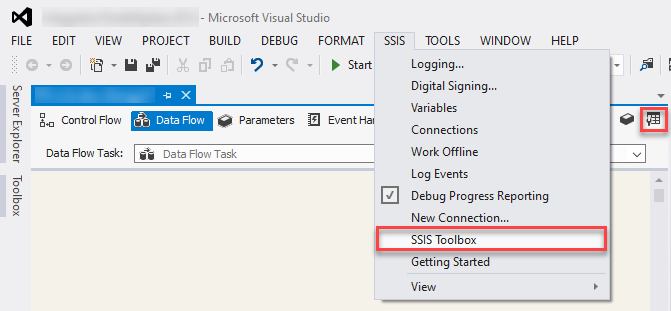
- Dec 18, 2019 The worst thing is that even having found the menu, sometimes the menu only shows two items (Work offline and Debug Progress Reporting). To make it show all the items again, click on the “Control Flow” area and then go back to the menu (it may be necessary to repeat this several times until it works).
By: Koen Verbeeck | Updated: 2020-07-02 | Comments | Related: More >DevOps
Now that our SSIS package development is finished, we can deploy it to the server. There we can schedule and execute the package as well. Deploying the SSIS Package. In Visual Studio, right-click on the project and select Deploy.
Problem
We are working on an Integration Services project with multiple developers. Someteam members work remotely, so it's not always easy to see which package someoneis working on. We'd like to use a git repository as a source control repository.This way we can also manage the code using branches. Is it possible to use git inVisual Studio?
Solution
Git is free and open-sourcedistributed version control system which has become very popular in the last years(one of the reasons is Github,a free online repository which was acquired by Microsoft). Git is distributed inthe sense that every developer has a local copy of the repository on his machine.When a developer makes changes, he/she first commits those against the local repository,then pushes the changes to the remote repository (on the server). If you'renew to the world of Git, these tips might help you get started:
Visual Studio supports git for quite some time now. To follow along with thistip, you need Visual Studio (you can use thefreecommunity edition if needed) and theSSIS extension. The screenshots in this tip are taken with Visual Studio 2019and version 3.5 of the extension. In the past, Microsoft offered online source controlthrough Team Foundation Services, which was renamed to Visual Studio Online, whichis now renamed toAzureDevops (the on-premises Team Foundation Services is now rebranded asAzure Devops Server). Azure Devops not only provides version control, but alsoCI/CD pipelines, agile boards and test plans.

In this tip, we'll focus on using Azure Devops to manage an IntegrationServices (SSIS) project. Azure Devops is free for the first 5 users. You can findmore information about pricinghere. To use Azure Devops, you need a Microsoft account.
Azure Devops and SSIS
Ssis In Visual Studio 2015
Creating an Organization and Repository
The first step in Azure Devops is to create an organization, which acts as acontainer for all your different projects. I already had an organization, but youcan easily create a new one:
You have to specify a name and the location for the organization:
Once the organization is created, you'll be asked to create a new project. Headcount planning template xls.
Discord bot maker. This will result in a project without any code repositories:
Let's switch to Visual Studio and see if we can connect to this new project.In the Team Explorer window, click on the green plug to manage your connections.There you can choose to connect to a project.
A new window will pop-up, where you can select the repositories linked to youraccount. Citrix workspace for mac catalina. At the top, you can switch between accounts. At the bottom, you can configurethe location on your hard drive where you want to sync the files to. Choose therepo we just created and click on Clone.
When clicking clone, you can choose between the following options:
Simply click Connect to finish the set-up. The repo is then copied to your localmachine:
It's possible you'll get the following message when cloning or syncingthe project:
Visual Studio uses the Git command line behind the scenes, which means of courseGit needs to be installed on your machine. Click on the Install link. Thiswill give you the following explanation:
Click on the Install button to proceed. This will take you tothe Git website where you can download the necessary components:
The installation is your typical 'next-next-finish' set-up. WhenGit is installed, restart Visual Studio. When trying to clone or sync, you mighthave to enter your credentials into the Git credential manager:
The value you enter in the Name box will be used when you commit changes.
Install Ssis In Visual Studio
Add a New SSIS Project to the Repository
Once the project is cloned into Visual Studio, we can start by adding a new IntegrationServices project to it. Create a new project and make sure the location is insidethe repository folder where you cloned the project to.
This means you need to change the default location into the following one:
When the project is created, you can see all the git commands at the bottom-rightof your screen, along with the different statuses. Creating the project resultedin 7 changes to the repository:
In the team explorer window, you can see those changes in the Changes submenu.You can also commit those changes along with a commit message. By clicking CommitAll, the 7 changes will be committed locally against the masterbranch, which is the default branch for a new project.
After the changes have been committed, you'll get a message you need tosync the commit to the server (or push the changesin git jargon).
In the bottom-right corner, you can see one commit is waiting to be pushed tothe server:
You can click on the arrow to go to the sync window and push the commit to theserver.
In the local folder, you can see Visual Studio added the folder for the SSISproject:
The same folder can now be found on the Azure Devops site:
Ssis In Visual Studio 2010
You can now continue to work on the SSIS project, add packages and commit thoseto the remote server.
Add an Existing Project to Azure Devops
Not all projects are brand new. Sometimes you will need to add existing SSISprojects to your new Azure Devops infrastructure. The easiest option would be tojust copy the project/solution files to the folder (…sourcereposssis_test)in your local repository. However, it would be cleaner to create a new repositoryfor your existing project. Let's open an existing project in Visual Studio.Right-click on the solution and choose Add Solution to Source Control…
Go to the changes menu to sync (or click on the upwards arrow in the bottom-rightcorner). You will be prompted with the following options:
Choose Publish Git Repo. In the following menu, choose the organizationand specify a name for the repository:
After syncing, you can see a new project was added to Azure Devops:
There's also a new repo, along with the files of your SSIS project:
Next Steps
- To learn more about Azure Devops, check out these tips:
- To learn more about SSIS, check outthis tutorial. More SSIS tips can be found inthis overview.
- You can find all Azure-related tipshere.
Last Updated: 2020-07-02
About the author
Ssis In Visual Studio 2013
View all my tips